

June 12, 2026
Connecticut just updated its privacy law again. Here's what brands need to know.

Connecticut doesn't wait around. The state has already updated its privacy law twice since 2023 with another round of changes landing soon.

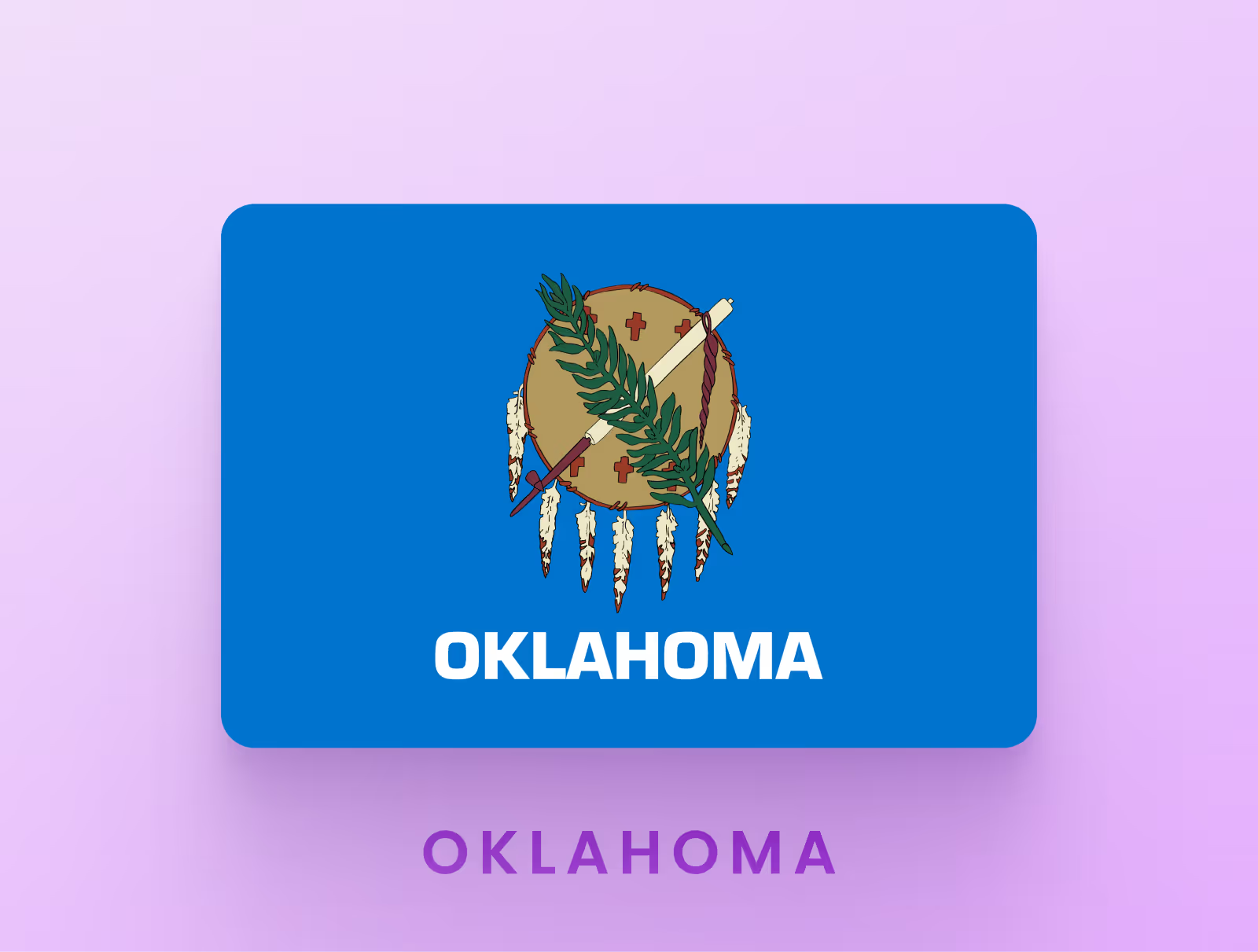
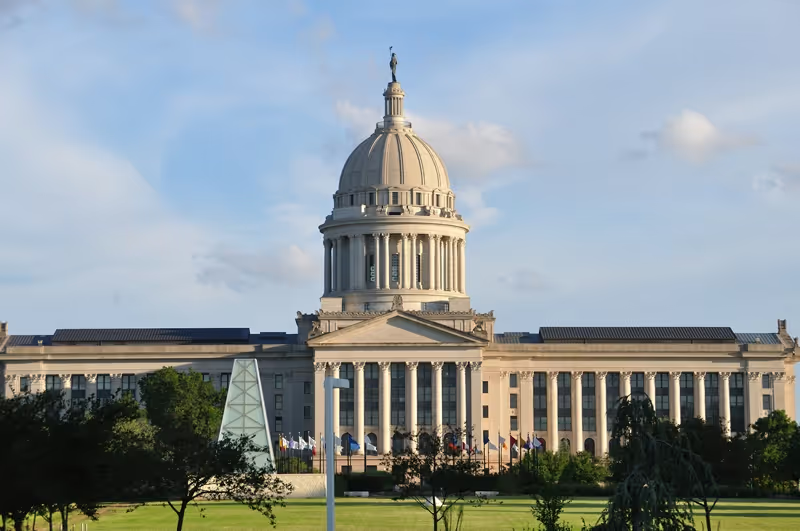
The Oklahoma Data Privacy Act (OKDPA), signed into law in March 2026, gives Oklahoma residents new rights over their personal data and creates compliance obligations for thousands of businesses.
Oklahoma SB 546 is largely modeled on the framework first established by Virginia's Consumer Data Protection Act, making it familiar territory for businesses already navigating the wave of state-level privacy laws.
Here's what businesses need to know.
The Oklahoma Data Privacy Act goes into effect on January 1, 2027.
The OKDPA applies to controllers and processors that conduct business in Oklahoma — or that produce products or services targeted to Oklahoma residents — and that, during a calendar year, either:
Like most state privacy laws, the OKDPA includes broad exemptions. The following entities are not covered by the law:
A wide range of data types are also exempt, including protected health information, employee and job applicant data, and information governed by the Fair Credit Reporting Act, among others.
The OKDPA grants Oklahoma residents the following rights with respect to their personal data:
Controllers are also required to establish an appeal process, giving consumers a path to challenge a denied request. If an appeal is denied, the controller must provide the consumer with a link to the Attorney General's online complaint mechanism.
Controllers or processors that continue to violate the OKDPA after a 30-day cure period — or that breach a written cure statement provided to the Attorney General — face civil penalties of up to $7,500 per violation. Courts may also award attorney fees and other expenses to the state.
With the Oklahoma Data Privacy Act taking effect January 1, 2027, businesses that meet the thresholds have time to prepare — but not unlimited time. Compliance requires updating privacy notices, building consumer request workflows, establishing appeal processes, and conducting data protection assessments for higher-risk activities.
TrueVault helps businesses get compliant with the OKDPA and every other state privacy law — without needing a dedicated legal team to do it. Sign up today and get compliant tomorrow.
Disclaimer: This content is provided for general informational purposes only and does not constitute legal or other professional advice. Without limiting the foregoing, the content may not reflect recent developments in the law, may not be complete, and may not be accurate or relevant in an applicable jurisdiction. This content is not a substitute for obtaining legal advice from a qualified licensed attorney in the applicable jurisdiction. The content is general in nature and may not pertain to specific circumstances, so it should not be used to act or refrain from acting based on it without first obtaining advice from professional counsel qualified in the applicable subject matter and jurisdictions.
Get monthly updates on the latest updates on policy & the shifting privacy landscape.
Dive into a world of knowledge, trends, and industry updates on the TrueVault blog.